In one of the most iconic superhero films of all time, Batman Begins, Bruce Wayne’s father says, “Why do we fall? To pick ourselves back up.” As much as we would all like to be as strong as Batman and have the physical and mental strength to pick ourselves up from a fall, not everyone can do it on their own. That’s where occupational therapists come in and work their magic. Occupational therapists help you both “pick yourself up” so that you can live a fully-functioning, productive life.
April is Occupational Therapy Month. Regardless if you have ever been to an occupational therapist, it is important to know that they exist and are here to help. What exactly is occupational therapy? It’s a service that helps patients with mental, physical, developmental and emotional disabilities perform everyday tasks. Occupational therapists provide these services to everyone, from young children with learning disabilities to elderly adults who have suffered from a stroke.
Natan Berry, MS, OTR/L at Sinai Hospital says, "One of the most satisfying things about being an occupational therapist is being able to see the tremendous progress that people make. A patient can be completely dependent for all of their activities of daily living, but through aggressive rehabilitation, even basic remedial tasks such as putting toothpaste on a toothbrush become possible until maximum independence is achieved. I was recently shopping at BJ's Wholesale Club when I ran into a former patient of mine. She was dependent on a mechanical ventilator for over a month, yet here she was walking and shopping the aisles independently!"
Here is a video that highlights the occupational therapy student program at Sinai Hospital:
At Sinai Hospital there are currently 22 occupational therapists who work in various departments such as NICU and geriatrics, offering both inpatient and outpatient services. “We all do various treatments that relate to the specific area that we work in, but treatments can range from completing basic activities of daily living such as dressing, bathing, feeding, and toileting, to instrumental activities of daily living such as cooking, medication management, and laundry. We also do range of motion of the upper extremities, neuromuscular electrical stimulation, splinting, and teaching how to use adaptive equipment to make daily life easier. We work on improving cognitive skills to make functioning in the real world safer and more efficient. We also have specialties, including our outpatient driving rehab program,” Berry says.
The goal of an occupational therapist is to help a patient accomplish their goals and maintain their independence, so help promote Occupational Therapy Month by thanking an occupational therapist or occupational assistant today!
To learn more about Occupational Therapy visit the Sinai Rehabilitation Center, or our previous blog post titled Occupational Therapy Can Be a Rewarding Career.
-Trish Smith

Wednesday, April 13, 2011
Tuesday, April 12, 2011
Celebrate National Healthcare Volunteer Week April 10-16
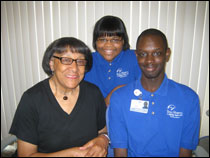 Every year thousands of people generously donate their time to hospitals. These volunteers assist with the comfort, care and happiness of hospital patients and their families, as well as the needs of hospital staff.
The week of April 10-16 has been designated as National Healthcare Volunteer Week. This week recognizes the significant contributions that volunteers make to the healthcare community. Most importantly, it is a time for people to thank these volunteers for enriching their lives.
LifeBridge Health centers Sinai Hospital, Northwest Hospital, Levindale Hebrew Geriatric Center and Hospital and Courtland Gardens Nursing & Rehabilitation Center each accept applications for their volunteer programs. People of all ages, from high school seniors to retired senior citizens, are encouraged to apply.
Some of the volunteer positions include:
· Office/clerical positions
· Therapeutic recreation assistants
· Friendly visitors
· Gift cart volunteers
· Book-Mobile volunteers
· Entertainers
· Spiritual support volunteers
· Horticulture therapy assistants
· Adult day care service assistants
Jennifer Terrell, Director of Volunteer Services and Business Outreach at Northwest Hospital, says “Volunteering is a great way to give back to the community and help others, and health care facilities are always in need of caring, compassionate people to devote their time and talent as volunteers.”
"Every day Sinai's team of volunteers make meaningful contributions to the patient care and administrative operations of the hospital. They are a constant reminder that helping others is the most important reason for working in health care," says, Beth Markowitz, Volunteer Manager for Sinai Hospital.
Janine Boulad, Volunteer Services Manager at Levindale and Courtland Gardens, says "First I want to say that I as the manager of volunteers I have the best job in the world. I have a job that reaffirms my faith in humanity everyday. Health care volunteers provide the human touch to our patients and residents. They give the gift of time and time can never be repaid. Typically in nursing homes 50 percent of the residents do not get visits, but with the help of our outstanding volunteers, every resident who wants a visit can have one."
Volunteering at a health care facility is a great way to give back to the community and to help the less fortunate. It will also help you gain valuable skills that you can use for the rest of your life.
Learn more about:
Volunteering at Sinai
Volunteering at Northwest
Volunteering at Levindale
Volunteering at Courtland Gardens
-Trish Smith
Monday, April 11, 2011
Congestive Heart Failure
Elizabeth Taylor died of congestive heart failure (CHF) at the age of 79 on March 23. Her death raises awareness of this serious condition that affects an estimated five million Americans.
Congestive heart failure means that the heart muscle cannot pump enough blood to meet the body’s needs. CHF may develop over a long period of time, sometimes over years, or almost immediately.
“There are many different reasons that CHF occurs,” says Dr. Ali Tabrizchi, an interventional cardiologist at the Heart Center at Sinai in Baltimore. “Genetics, which are passed down through families, as well lifestyle choices, can be to blame.”
Among the possible causes:
Chest pain is only one possible symptom of a heart problem. Other symptoms can be:
Based on examinations and tests, your physician will develop a treatment plan for you, which can include:
-Helene King
Congestive heart failure means that the heart muscle cannot pump enough blood to meet the body’s needs. CHF may develop over a long period of time, sometimes over years, or almost immediately.
“There are many different reasons that CHF occurs,” says Dr. Ali Tabrizchi, an interventional cardiologist at the Heart Center at Sinai in Baltimore. “Genetics, which are passed down through families, as well lifestyle choices, can be to blame.”
Among the possible causes:
- Coronary artery disease
- Problems with the heart’s valves
- Thyroid conditions
- A heart attack
- High blood pressure
- High cholesterol
- Obesity
- Diabetes
- An infection of the heart muscle
- Vitamin deficiencies
Chest pain is only one possible symptom of a heart problem. Other symptoms can be:
- Constantly tired or weak
- Dizzy spells
- Frequent urination during the night
- Problems breathing when lying down
- Shortness of breath, wheezing or coughing when you exert yourself
- Swollen ankles or feet
- Waking at night coughing or short of breath
Based on examinations and tests, your physician will develop a treatment plan for you, which can include:
- Increased activity as recommended
- Dietary changes to reduce intake of salt and sodium
- Medication to help the heart work better
- Rest to give the heart a break
- Referral for heart transplantation
-Helene King
Friday, April 8, 2011
National Heimlich Maneuver Week is April 10-16
Every five days a child in the U.S. dies from choking to death. Most of these deaths could have been prevented if the parents knew how to administer the Heimlich maneuver. This emergency technique, which was developed by American Henry Heimlich, was founded in 1974. Since then it has saved over 100,000 American lives and countless more around the world.
This year National Heimlich Maneuver Week will occur from April 10-16. The week-long observance will celebrate the life-saving technique and educate the public about proper ways to perform it.
Do you want to learn the proper way to administer the Heimlich maneuver? Watch this video:
To learn more about the Heimlich Maneuver visit the Heimlich Institute.
-Trish Smith
This year National Heimlich Maneuver Week will occur from April 10-16. The week-long observance will celebrate the life-saving technique and educate the public about proper ways to perform it.
Do you want to learn the proper way to administer the Heimlich maneuver? Watch this video:
To learn more about the Heimlich Maneuver visit the Heimlich Institute.
-Trish Smith
Thursday, April 7, 2011
April 7 is National Alcohol Screening Day
Every year thousands of people fall victim to alcohol-related injuries. The scary fact is that many of these injuries are caused by alcoholics who took their first drink when they were underage. The Screening for Mental Health website says “Approximately 20 percent of eighth graders, 35 percent of tenth graders, and 48 percent of twelfth graders report having consumed alcohol during the past month.”
By the time young people graduate college, many of them will be consuming four or five alcoholic drinks in one night. This puts them and their peers at a higher risk for injury, and will likely lead to alcoholism. Before the cycle of alcohol addition occurs, people need to become educated about alcohol use and its health concerns.
National Alcohol Screening Day is an annual event that raises awareness about alcohol consumption. It is a day for people to receive free advice on alcohol use problems, and for them to take anonymous alcohol screenings to determine if they need help.
The following video was created by students from the Gregory School of Pharmacy at Palm Beach Atlantic University to promote National Alcohol Screening Day:
If you think that you or someone you know may have an alcohol addiction, please take an anonymous alcohol self-assessment on How Do You Score or Alcohol Screening, or find an Alcohol Treatment Center Any Place in the U.S. on the National Alcoholism and Substance Abuse Information Center website.
-Trish Smith
By the time young people graduate college, many of them will be consuming four or five alcoholic drinks in one night. This puts them and their peers at a higher risk for injury, and will likely lead to alcoholism. Before the cycle of alcohol addition occurs, people need to become educated about alcohol use and its health concerns.
National Alcohol Screening Day is an annual event that raises awareness about alcohol consumption. It is a day for people to receive free advice on alcohol use problems, and for them to take anonymous alcohol screenings to determine if they need help.
The following video was created by students from the Gregory School of Pharmacy at Palm Beach Atlantic University to promote National Alcohol Screening Day:
If you think that you or someone you know may have an alcohol addiction, please take an anonymous alcohol self-assessment on How Do You Score or Alcohol Screening, or find an Alcohol Treatment Center Any Place in the U.S. on the National Alcoholism and Substance Abuse Information Center website.
-Trish Smith
Wednesday, April 6, 2011
LifeBridge Health Sports Medicine & Rehabilitation and Physiotherapy Associates Open New Physical Therapy Clinic in Reisterstown

LifeBridge Health Sports Medicine & Rehabilitation powered by Physiotherapy Associates announces the grand opening of its sixth physical therapy clinic today in Reisterstown, Md. The Reisterstown facility offers expert, individualized physical therapy treatment from a team of licensed physical therapists in a non-hospital setting.
Patients have access to a comprehensive list of services: back and neck care, orthopedic physical therapy, post-operative rehabilitation, neurological rehabilitation, work injury rehabilitation and other specialty services.
“We are excited about the opportunity to care for the residents of Reisterstown and to further expand our brand of individualized high-quality physical therapy services to even more people in the Baltimore area,” said Dave Gray, P.T., Area vice president, Physiotherapy Associates.
In addition to the Reisterstown clinic, there are clinic locations in Eldersburg, Owings Mills, Pikesville, Timonium and Towson. Patients have the option of receiving care at any of the clinics within the system. The Pikesville clinic, located within LifeBridge Health & Fitness, offers additional services such as aquatic therapy and a fitness center.
To learn more visit LifeBridge Health & Fitness.
-Noel Lloyd
5 Ways to Eat Healthy at a Ballpark
 Baseball season is officially here! What does that mean? It means going to your local ballpark, watching your favorite team battle it out and eating a lot of unhealthy ballpark food.
Besides paying an arm and a leg for beer and food, you’ll be paying with your health if you keep ingesting all those hot dogs and French fries.
By making a few healthy decisions you can feel good about what you’re eating, even if you don’t feel good about how well your team is playing. Here are five ways that you can eat healthy at your local stadium or arena.
1. Choose Chicken Over Beef or Pork
It might be considered un-American to not eat a hot dog at a baseball game, but since you do have alternatives, you should choose a healthier option. A typical Nathan’s hot dog has 297 calories, a hamburger 273 calories and a grilled skinless chicken breast sandwich has about 120 calories. If you have to choose between a grilled chicken sandwich and fried chicken fingers, always go with the sandwich.
2. Ditch the Ice Cream and Go for Frozen Yogurt
On a hot summer day you might want nothing more than a delicious ice cream cone, but beware the calories. A traditional vanilla ice cream cone has about 145 calories, while vanilla frozen yogurt has about 117 calories.
3. Popcorn vs. Peanuts
If you’re craving a snack to munch on during the game, choose peanuts instead of popcorn. A typical box of popcorn can have up to 2,000 calories, considering all the butter and oil that was used to cook it. A serving of dry roasted peanuts has about 854 calories, which is still high, but much healthier than those kernels.
4. Avoid the Cheese, Please!
Cheese is one of the tastiest, but most high-calorie foods to eat. That being said, as tempting as it may be to get an order of nachos smothered in cheese (over 1,000 calories), cheese-smothered French fries (644 calories) or a super soft pretzel with cheese (569 calories), opt for food without the cheese. Your stomach will thank you later.
5. Eat Beforehand or Bring Your Own Snacks
Whoever said that you have to spend a huge chunk of your hard-earned money at a baseball game? You can always eat before the game to avoid having the urge to splurge on fatty stadium food. Also, you can bring a Ziploc® bag of healthy snacks like granola or fruit to curb your appetite.
Now that you know how to eat healthy at your local sports stadium it’s time for you to put on your favorite jersey and support your local team!
To learn more about healthy food options visit Sinai Hospital's Diet and Nutrition page.
-Trish Smith
Tuesday, April 5, 2011
Sinai Hospital of Baltimore Earns Designation as Cardiac Interventional Center
The Maryland Institute for Emergency Medical Services Systems (MIEMSS) designated Sinai Hospital of Baltimore as a Cardiac Interventional Center on April 1, 2011.
This distinction means that Sinai complies with state standards so that emergency medical services (EMS) workers can bring patients experiencing the most common type of heart attack, called a STEMI, here. Ambulances bypass hospitals that are not a cardiac interventional center.
It is widely recognized that the sooner a patient is treated for the blockage causing a STEMI, the better the heart muscle will recover. That’s why a well-coordinated effort between EMS providers in the field and the medical staff at a cardiac interventional center is generally associated with fewer complications and better outcomes.
“Maryland’s EMS system continues to be a national model for trauma and emergency care,” said Governor Martin O’Malley. “The designation of cardiac interventional centers complements our statewide system and ensure that Marylanders receive the best treatment possible when it comes to heart attacks and STEMI care.”
The American Hospital Association estimates that 400,000 people in the United States and 5,600 in Maryland experience a STEMI each year, so it’s important to recognize the symptoms and call 9-1-1 immediately.
Symptoms can include:
-Helene King
This distinction means that Sinai complies with state standards so that emergency medical services (EMS) workers can bring patients experiencing the most common type of heart attack, called a STEMI, here. Ambulances bypass hospitals that are not a cardiac interventional center.
It is widely recognized that the sooner a patient is treated for the blockage causing a STEMI, the better the heart muscle will recover. That’s why a well-coordinated effort between EMS providers in the field and the medical staff at a cardiac interventional center is generally associated with fewer complications and better outcomes.
“Maryland’s EMS system continues to be a national model for trauma and emergency care,” said Governor Martin O’Malley. “The designation of cardiac interventional centers complements our statewide system and ensure that Marylanders receive the best treatment possible when it comes to heart attacks and STEMI care.”
The American Hospital Association estimates that 400,000 people in the United States and 5,600 in Maryland experience a STEMI each year, so it’s important to recognize the symptoms and call 9-1-1 immediately.
Symptoms can include:
- Discomfort in the center of the chest - which can feel like pressure, squeezing, fullness or pain - and lasts more than a few minutes or that goes away and comes back
- Pain or discomfort in one or both arms, the back, neck, jaw and/or stomach
- Shortness of breath
- Sweating
- Nausea
- Lightheadedness
-Helene King
Monday, April 4, 2011
Jennifer Terrell Earns ROMG Chamber President's Award
Jennifer Terrell, director of Volunteers and Business Outreach at Northwest Hospital, was the recipient of this year’s Reisterstown-Owings Mills-Glyndon Chamber of Commerce President’s Award.
This is an honor awarded by the chamber’s president and given to the member who has given the most and gone the extra mile for the ROMG Chamber of Commerce.
“Jenn has helped just about every committee we have with events or anything they have needed assistance with,” says Rachel Heird, president of the ROMG Chamber and AVP, branch manager of Farmers & Merchants Bank in Owings Mills. “Jenn also volunteered to co-chair one of our most popular committees, Women In Business. She’s an all around team player who gives over 100 percent to whatever she takes on, and she is a valued member of this organization.”
Jennifer is currently the 1st vice president of the chamber and a very active member of the group. When helping out with chamber events, she’s there from start to end to ensure that everything runs smoothly. She is similarly dedicated to her work in organizing the hospital volunteers at Northwest.
--Holly Hosler
This is an honor awarded by the chamber’s president and given to the member who has given the most and gone the extra mile for the ROMG Chamber of Commerce.
“Jenn has helped just about every committee we have with events or anything they have needed assistance with,” says Rachel Heird, president of the ROMG Chamber and AVP, branch manager of Farmers & Merchants Bank in Owings Mills. “Jenn also volunteered to co-chair one of our most popular committees, Women In Business. She’s an all around team player who gives over 100 percent to whatever she takes on, and she is a valued member of this organization.”
Jennifer is currently the 1st vice president of the chamber and a very active member of the group. When helping out with chamber events, she’s there from start to end to ensure that everything runs smoothly. She is similarly dedicated to her work in organizing the hospital volunteers at Northwest.
--Holly Hosler
Friday, April 1, 2011
Health Awareness Observances for the Month of April
What are the symptoms of autism? Do you know the best way to protect your infant against vaccine-preventable diseases? How do you prevent meningitis? If you don’t know the answers to these questions and you want to educate yourself about autism, infant immunization, meningitis and other health-related issues, then get ready to celebrate April Health Awareness Month!
The following health observances are recognized for the entire month of April:
Alcohol Awareness Month
According to Psychology Today, “25% of U.S. children are exposed to alcohol-use disorders in their family.” Considering the millions of children that there are in the U.S., that is a tragically high number. Alcohol Awareness Month was created to educate both children and adults about the devastating effects of alcohol. Individuals and organizations can learn how to recognize the signs of alcohol abuse and help people get the treatment they need.
Irritable Bowel Syndrome Awareness Month
The International Foundation for Functional Gastrointestinal Disorders estimates that “IBS affects between 25 and 45 million people in the United States” and “worldwide it's estimated that between 1 in 10 and nearly 1 in 4 people (9% to 23% of populations) has IBS.” What exactly is IBS? It’s a disorder that causes abdominal pain and changes in bowel movements. Irritable Bowel Syndrome Awareness Month promotes the understanding of IBS, ways to treat it and the raising of money for advancement in IBS research.
Occupational Therapy Month
Did you know that occupational therapy helps people who are suffering from arthritis, diabetes and obesity? Occupational Therapy Month is a celebration to appreciate occupational therapists and assistants. Visit the American Occupational Therapy Association, Inc. to learn Ten Things You Can Do to Celebrate Occupational Therapy Month.
March for Babies
According to the March of Dimes website, “In the United States, about 12.8 percent of babies (more than half a million a year) are born prematurely. The rate of premature birth has increased by 36 percent since the early 1980s.” March for Babies was created by the March of Dimes to help fund research to prevent premature birth, birth defects and other birth-related conditions associated with newborns.
National Child Abuse Prevention Month
“Over 3 million reports of child abuse are made every year in the United States,” according to ChildHelp.org, an organization dedicated to helping victims of child abuse and neglect. National Child Abuse Prevention Month raises awareness about these victims and educates people on strengthening families and communities affected by child abuse.
National Autism Awareness Month
“One percent of the population of children in the U.S. ages 3 to 17 have an autism spectrum disorder,” states the Autism Society. Autism is a developmental disorder in the brain that affects a person’s social and communication skills. It usually appears within the first three years of life, but with early and effective treatment, it can help children successfully integrate into society. National Autism Awareness Month educates the public about autism and promotes fundraising for the Autism Society of America.
Sexually Transmitted Disease Awareness Month
The Centers for Disease Control estimates “there are approximately 19 million new cases of STDs each year in the United States, almost half of them among young people ages 15 to 24.” These sexually transmitted diseases can create long-term health illnesses, and eventually lead to death. STD Awareness Month educates people about ways they can prevent STDs, as well as stresses the importance of talking to a healthcare provider if you have an STD.
National Donate Life Month
National Donate Life Month was created in 2003 by Donate Life America, an organization whose goal is to motivate the American public to become organ, eye and tissue donors. According to its website, “An average of 18 people die each day from the lack of available organs for transplant.” Donate Life America proclaimed April as National Donate Life Month to continue its mission of raising awareness for organ donation in America.
National Facial Protection Month
The Centers for Disease Control and Prevention estimates that mouth guards can prevent up to 200,000 injuries a year. Although it is mandatory for sports players to wear mouth guards in hockey, football and lacrosse, many people believe that it should be mandatory for all athletes in every sport. National Facial Protection Month is sponsored by the American Association of Oral and Maxillofacial Surgeons, the American Association of Orthodontists and the American Academy of Pediatric Dentistry, and it advocates for mouth guard protection and protective facial gear for all sports players.
Foot Health Awareness Month
According to the American Podiatric Medical Association, “a 150 pound person walking one mile can exert a force of 63.5 tons on a single foot? That weight can greatly impact a person’s ability to move around. Foot Health Awareness Month encourages people to take care of their feet and ankles so that they can prevent future foot problems from happening.
National Minority Health Month
Did you know that African American men are 80% more likely to have chronic liver disease than white men, or that Asian American women are 2.4 times more likely to die from chronic liver disease than non-Hispanic white women? These are statistics from the Office of Minority Health, an organization established by the U.S. Department of Health & Human Services. National Minority Health Month educates the public about ways to improve the health of racial and ethnic minorities in America. Visit the National Minority Quality Forum website for more information.
-Trish Smith
The following health observances are recognized for the entire month of April:
Alcohol Awareness Month
According to Psychology Today, “25% of U.S. children are exposed to alcohol-use disorders in their family.” Considering the millions of children that there are in the U.S., that is a tragically high number. Alcohol Awareness Month was created to educate both children and adults about the devastating effects of alcohol. Individuals and organizations can learn how to recognize the signs of alcohol abuse and help people get the treatment they need.
Irritable Bowel Syndrome Awareness Month
The International Foundation for Functional Gastrointestinal Disorders estimates that “IBS affects between 25 and 45 million people in the United States” and “worldwide it's estimated that between 1 in 10 and nearly 1 in 4 people (9% to 23% of populations) has IBS.” What exactly is IBS? It’s a disorder that causes abdominal pain and changes in bowel movements. Irritable Bowel Syndrome Awareness Month promotes the understanding of IBS, ways to treat it and the raising of money for advancement in IBS research.
Occupational Therapy Month
Did you know that occupational therapy helps people who are suffering from arthritis, diabetes and obesity? Occupational Therapy Month is a celebration to appreciate occupational therapists and assistants. Visit the American Occupational Therapy Association, Inc. to learn Ten Things You Can Do to Celebrate Occupational Therapy Month.
March for Babies
According to the March of Dimes website, “In the United States, about 12.8 percent of babies (more than half a million a year) are born prematurely. The rate of premature birth has increased by 36 percent since the early 1980s.” March for Babies was created by the March of Dimes to help fund research to prevent premature birth, birth defects and other birth-related conditions associated with newborns.
National Child Abuse Prevention Month
“Over 3 million reports of child abuse are made every year in the United States,” according to ChildHelp.org, an organization dedicated to helping victims of child abuse and neglect. National Child Abuse Prevention Month raises awareness about these victims and educates people on strengthening families and communities affected by child abuse.
National Autism Awareness Month
“One percent of the population of children in the U.S. ages 3 to 17 have an autism spectrum disorder,” states the Autism Society. Autism is a developmental disorder in the brain that affects a person’s social and communication skills. It usually appears within the first three years of life, but with early and effective treatment, it can help children successfully integrate into society. National Autism Awareness Month educates the public about autism and promotes fundraising for the Autism Society of America.
Sexually Transmitted Disease Awareness Month
The Centers for Disease Control estimates “there are approximately 19 million new cases of STDs each year in the United States, almost half of them among young people ages 15 to 24.” These sexually transmitted diseases can create long-term health illnesses, and eventually lead to death. STD Awareness Month educates people about ways they can prevent STDs, as well as stresses the importance of talking to a healthcare provider if you have an STD.
National Donate Life Month
National Donate Life Month was created in 2003 by Donate Life America, an organization whose goal is to motivate the American public to become organ, eye and tissue donors. According to its website, “An average of 18 people die each day from the lack of available organs for transplant.” Donate Life America proclaimed April as National Donate Life Month to continue its mission of raising awareness for organ donation in America.
National Facial Protection Month
The Centers for Disease Control and Prevention estimates that mouth guards can prevent up to 200,000 injuries a year. Although it is mandatory for sports players to wear mouth guards in hockey, football and lacrosse, many people believe that it should be mandatory for all athletes in every sport. National Facial Protection Month is sponsored by the American Association of Oral and Maxillofacial Surgeons, the American Association of Orthodontists and the American Academy of Pediatric Dentistry, and it advocates for mouth guard protection and protective facial gear for all sports players.
Foot Health Awareness Month
According to the American Podiatric Medical Association, “a 150 pound person walking one mile can exert a force of 63.5 tons on a single foot? That weight can greatly impact a person’s ability to move around. Foot Health Awareness Month encourages people to take care of their feet and ankles so that they can prevent future foot problems from happening.
National Minority Health Month
Did you know that African American men are 80% more likely to have chronic liver disease than white men, or that Asian American women are 2.4 times more likely to die from chronic liver disease than non-Hispanic white women? These are statistics from the Office of Minority Health, an organization established by the U.S. Department of Health & Human Services. National Minority Health Month educates the public about ways to improve the health of racial and ethnic minorities in America. Visit the National Minority Quality Forum website for more information.
-Trish Smith
Thursday, March 31, 2011
Knowledge is Power: The Know Your Health Program at LifeBridge Health
The following is an excerpt from MdMD for Life 2011, available now.
For 50-year-old Patricia Smith*, nothing beats a bowl of Cocoa Krispies or a stack of Oreos, paired with a tall glass of whole milk. These days, however, you’re more likely to find her eating Cheerios with soy milk or munching on an apple when cookie cravings strike. She attributes her healthier habits to news she received while attending a low-cost health screening last year at Baltimore’s Woodlawn Senior Center.
“Hypertension and diabetes run in my family, so I figured it was a good idea to go and get checked out,” Patricia recalls. She was working full-time, but did not have health insurance at the time, and hadn’t seen a physician in several years. At the screening, part of LifeBridge Health’s Know Your Health program, a nurse checked her height, weight and blood pressure; calculated her body mass index (BMI) and took a blood sample to measure Patricia's total cholesterol, triglyceride and fasting glucose levels.
Results showed that she was overweight and that her blood pressure, cholesterol and blood sugar readings were slightly high, suggesting she was on the verge of a battle with the same health problems as her parents.
To read more, click here.
-Amy Novotney
For 50-year-old Patricia Smith*, nothing beats a bowl of Cocoa Krispies or a stack of Oreos, paired with a tall glass of whole milk. These days, however, you’re more likely to find her eating Cheerios with soy milk or munching on an apple when cookie cravings strike. She attributes her healthier habits to news she received while attending a low-cost health screening last year at Baltimore’s Woodlawn Senior Center.
“Hypertension and diabetes run in my family, so I figured it was a good idea to go and get checked out,” Patricia recalls. She was working full-time, but did not have health insurance at the time, and hadn’t seen a physician in several years. At the screening, part of LifeBridge Health’s Know Your Health program, a nurse checked her height, weight and blood pressure; calculated her body mass index (BMI) and took a blood sample to measure Patricia's total cholesterol, triglyceride and fasting glucose levels.
Results showed that she was overweight and that her blood pressure, cholesterol and blood sugar readings were slightly high, suggesting she was on the verge of a battle with the same health problems as her parents.
To read more, click here.
-Amy Novotney
Wednesday, March 30, 2011
Walking: A Simple and Effective Way to Stay Healthy
 by Jason Bosley-Smith, CSCS, Lead Lifestyle Coach, Live Well @ LifeBridge
Research results could hardly be clearer: Taking a walk is one of the best ways to take charge of your health, so get out there and start your walking workout routine! A study in the Journal of the American Medical Association (February 11, 1998) showed that walking briskly for half an hour just six times a month cut the risk of premature death in men and women by 44 percent. A study in the New England Journal of Medicine (January 8, 1997) reported that men 61 to 81 years old sharply reduced their risk of death from all causes, including cancer and heart disease, by walking two miles a day. Other research has shown similar results for women.
The added benefit of walking is that it’s simple to do anywhere, anytime! Walking requires no special equipment and can be performed outdoors or inside through hallways and stairwells. With a walking routine, you can begin at your own pace and find a level of intensity that is appropriate for your own personal starting point; therefore, whether you’re 21 or 61, walking can serve as an ideal form of activity.
Begin by moving at a comfortable pace and use the “talk test” ” to measure your intensity:
Talk Test
- Too Intense – You can barely breathe and can’t carry on light conversation.
- Too Easy – You can recite Shakespeare.
- Just Right – You can speak in short phrases but still feel breathing and heart rate slightly elevated.
Here are some other tips for making the most out of your walking workout:
1. Partner Up – Studies have shown that individuals are more likely to adhere to a routine when paired up with another person. Find a friend or coworker and agree to walk together each day at lunch. Using the “buddy system” like this can also help each of you keep one another accountable.
2. Warm Up First, Then Stretch – Begin your walking workout with a brief 5 minute light walk then stop to stretch before continuing on for your extended routine. Focus on stretching the shoulders, hips and calves as these muscles are most involved in your walking pattern.
3. Practice Posture – As you walk, keep your shoulders back, chest out and chin up. Poor posture creates aches and pains and prevents optimal breathing. By keeping your posture “tall,” you’ll open up your lungs to take deeper, fuller breaths as you walk and prevent tension in the neck, shoulders and back.
4. Arm Action – Pump your arms as you walk to create more motion in your upper body. The more muscles you move, the more calories you burn so get the arms involved in the action.
5. Let Go – Forget about the stress and worries of the day and let your mind focus on what your body is doing. Avoid talking about work or other stressful situations throughout the time of your walk. Give your brain a break, smile and have fun!
Aim for a 10-15 minute walk when you first begin, and then gradually add 2 minutes to your walk each week until you reach a 30 minute walking routine. Now get up, get going, and walk it out!
Tuesday, March 29, 2011
Baby Fat: Sinai Hospital Helps Women with Gestational Diabetes
The following is an excerpt from MdMD for Life 2011, available now.
As a nurse, Lakecia Lewis knew what she needed to do to have a healthy pregnancy, including eating better. But when she was diagnosed with gestational diabetes in 2006, Lewis kicked into high gear, becoming more motivated to follow a healthy meal plan and to keep her weight gain minimal.
“I realized it wasn’t just about me now that I was pregnant,” Lewis says. “The gestational diabetes was going to affect the baby, and I wanted both of us to be healthy.”
Lewis received the support she needed through Sinai Hospital’s Diabetes and Pregnancy Education and Management Program. Anna Osztreicher, a certified nurse practitioner and diabetes educator and program manager, meets with each patient to formulate an individualized plan.
“I have a nonjudgmental attitude,” Osztreicher says of the “intimate relationship” she develops with her patients. “I ask about their fears and keep everything in a realistic perspective. These women are obviously very concerned about their baby’s well-being.”
Gestational diabetes occurs as a result of a resistance to insulin during pregnancy. It is estimated that between 6 to 8 percent of all pregnancies involve gestational diabetes, says David Schwartz, M.D., chief of the Department of Obstetrics-Gynecology at Sinai Hospital. Risk factors include being overweight, having a family history of diabetes, or being considered pre-diabetic.
The impact of gestational diabetes on the health of mother and baby should not be minimized, Schwartz says.
“Gestational diabetes can cause the baby to get too big, which can obstruct labor or result in other complications during delivery,” he says. “There’s also a concern about stillbirth. That’s why we help these women get their blood sugar level under control.”
The number of cases are increasing, as Schwartz explains below:
To read more, click here.
-Elizabeth Leis-Newman
As a nurse, Lakecia Lewis knew what she needed to do to have a healthy pregnancy, including eating better. But when she was diagnosed with gestational diabetes in 2006, Lewis kicked into high gear, becoming more motivated to follow a healthy meal plan and to keep her weight gain minimal.
“I realized it wasn’t just about me now that I was pregnant,” Lewis says. “The gestational diabetes was going to affect the baby, and I wanted both of us to be healthy.”
Lewis received the support she needed through Sinai Hospital’s Diabetes and Pregnancy Education and Management Program. Anna Osztreicher, a certified nurse practitioner and diabetes educator and program manager, meets with each patient to formulate an individualized plan.
“I have a nonjudgmental attitude,” Osztreicher says of the “intimate relationship” she develops with her patients. “I ask about their fears and keep everything in a realistic perspective. These women are obviously very concerned about their baby’s well-being.”
Gestational diabetes occurs as a result of a resistance to insulin during pregnancy. It is estimated that between 6 to 8 percent of all pregnancies involve gestational diabetes, says David Schwartz, M.D., chief of the Department of Obstetrics-Gynecology at Sinai Hospital. Risk factors include being overweight, having a family history of diabetes, or being considered pre-diabetic.
The impact of gestational diabetes on the health of mother and baby should not be minimized, Schwartz says.
“Gestational diabetes can cause the baby to get too big, which can obstruct labor or result in other complications during delivery,” he says. “There’s also a concern about stillbirth. That’s why we help these women get their blood sugar level under control.”
The number of cases are increasing, as Schwartz explains below:
To read more, click here.
-Elizabeth Leis-Newman
Monday, March 28, 2011
Bariatric Services Now Offered at Sinai and Northwest
While its patients are slimming down, the Bariatrics Program at LifeBridge Health is expanding, with services at Northwest and Sinai hospitals.
Kuldeep Singh, M.D., joined the Division of General Surgery at Northwest Hospital as the division head of Minimally Invasive Surgery, specializing in bariatrics. Cynthia Long, M.D., joined the Department of Surgery at Sinai Hospital, also specializing in bariatrics. Along with Christina Li, M.D., division head of Minimally Invasive Surgery at Sinai Hospital, Singh and Long will offer the following options for patients who are eligible for bariatric surgery: laparoscopic gastric bypass, sleeve gastrectomy and the laparoscopic adjustable gastric banding procedure.
Laparoscopic gastric bypass surgery involves stapling the stomach and rerouting the small intestine to form a small stomach pouch about the size of an egg. A limb of intestine is attached to the pouch to create a bypass. After surgery, food enters the pouch and empties into the small intestine. As a result, food bypasses almost all of the stomach and a segment of the intestine.
Sleeve gastrectomy is a nonreversible procedure that generates weight loss solely through reduced food intake. Divided vertically, the stomach is reduced by more than 85 percent. The portion of the stomach that remains is shaped like a very slim banana or sleeve. There is no intestinal bypass, only stomach reduction.
With the laparoscopic adjustable gastric banding procedure, an inflatable band is placed around the upper part of the stomach increasing the feeling of fullness. When less food is consumed, the body draws on its own fat reserves for energy, which in turn results in weight loss. The procedure is less invasive than the other two procedures. It requires no cutting or stapling of the stomach or bowel, and is also associated with a lower risk of malnutrition. Adjustments to the band can be made without additional surgery, and it is reversible if necessary.
The bariatrics surgeons will educate patients and help them to select the best weight loss surgery that will suit their needs, fit with their health and lifestyle, and match their comfort level.
Each bariatrics physician is board certified. Li specializes in laparoscopic gastric bypass and laparoscopic adjustable gastric banding. Long specializes in laparoscopic Roux-en-Y gastric bypass surgery, laparoscopic adjustable gastric banding and laparoscopic sleeve gastrectomy. Singh specializes in laparoscopic Roux-en-Y gastric bypass surgery, laparoscopic sleeve gastrectomy and laparoscopic gastric banding; and soon he will offer laparoscopic greater curvature plication.
To meet with a physician, call 410.601.WELL.
Kuldeep Singh, M.D., joined the Division of General Surgery at Northwest Hospital as the division head of Minimally Invasive Surgery, specializing in bariatrics. Cynthia Long, M.D., joined the Department of Surgery at Sinai Hospital, also specializing in bariatrics. Along with Christina Li, M.D., division head of Minimally Invasive Surgery at Sinai Hospital, Singh and Long will offer the following options for patients who are eligible for bariatric surgery: laparoscopic gastric bypass, sleeve gastrectomy and the laparoscopic adjustable gastric banding procedure.
Laparoscopic gastric bypass surgery involves stapling the stomach and rerouting the small intestine to form a small stomach pouch about the size of an egg. A limb of intestine is attached to the pouch to create a bypass. After surgery, food enters the pouch and empties into the small intestine. As a result, food bypasses almost all of the stomach and a segment of the intestine.
Sleeve gastrectomy is a nonreversible procedure that generates weight loss solely through reduced food intake. Divided vertically, the stomach is reduced by more than 85 percent. The portion of the stomach that remains is shaped like a very slim banana or sleeve. There is no intestinal bypass, only stomach reduction.
With the laparoscopic adjustable gastric banding procedure, an inflatable band is placed around the upper part of the stomach increasing the feeling of fullness. When less food is consumed, the body draws on its own fat reserves for energy, which in turn results in weight loss. The procedure is less invasive than the other two procedures. It requires no cutting or stapling of the stomach or bowel, and is also associated with a lower risk of malnutrition. Adjustments to the band can be made without additional surgery, and it is reversible if necessary.
The bariatrics surgeons will educate patients and help them to select the best weight loss surgery that will suit their needs, fit with their health and lifestyle, and match their comfort level.
Each bariatrics physician is board certified. Li specializes in laparoscopic gastric bypass and laparoscopic adjustable gastric banding. Long specializes in laparoscopic Roux-en-Y gastric bypass surgery, laparoscopic adjustable gastric banding and laparoscopic sleeve gastrectomy. Singh specializes in laparoscopic Roux-en-Y gastric bypass surgery, laparoscopic sleeve gastrectomy and laparoscopic gastric banding; and soon he will offer laparoscopic greater curvature plication.
To meet with a physician, call 410.601.WELL.
Friday, March 25, 2011
LifeBridge Health Heroes
Health Care Heroes
Congratulations to The Daily Record’s 2011 Health Care Heroes. The LifeBridge Health winners are:
Tamika Gladney, R.N., Northwest Hospital
Rosa Griffith, volunteer, Levindale Hebrew Geriatric Center and Hospital
Gerami Seitzman, M.D., ophthalmologist, Krieger Eye Institute, Sinai Hospital
Michael Zollicoffer, M.D., pediatrician, Sinai Hospital
Seitzman, director of Cornea, External Disease and Uveitis at the Krieger Eye Institute at Sinai Hospital, was the top winner in the physician category.
“Just doing my job is an honor in itself,” Seitzman says. “And this honor adds icing to the cake.”
Dr. Seitzman comments on her award:
Here what Tamika Gladney, R.N. has to say about this recognition.
Rosa Griffith’s sons accepted this posthumous award on her behalf. Rosa began volunteering at the age of 77, and continued even after surviving a stroke. In the spring of 2010, at age 82, Rosa was diagnosed with cancer. She continued to volunteer, amassing 1,400 hours during her nearly five years as a Levindale volunteer.
The Daily Record received nearly 150 nominations for its annual Health Care Heroes awards, which recognizes individuals in eight categories including physician, volunteer, community outreach, nurse, midlevel practitioner, health care professional, advancements in health care, and animal care provider
About 400 people attended the award ceremony this week at the Hyatt Regency Hotel in Baltimore.
The Daily Record, a daily newspaper published five times a week to provide legal and business news, created Health Care Heroes in 2003 "to honor those heroes in the health care industry who impact the lives of Marylanders." For a full list of the 2011 finalists, visit http://thedailyrecord.com/health-care-heroes/current-winners/
Congratulations to The Daily Record’s 2011 Health Care Heroes. The LifeBridge Health winners are:
Tamika Gladney, R.N., Northwest Hospital
Rosa Griffith, volunteer, Levindale Hebrew Geriatric Center and Hospital
Gerami Seitzman, M.D., ophthalmologist, Krieger Eye Institute, Sinai Hospital
Michael Zollicoffer, M.D., pediatrician, Sinai Hospital
Seitzman, director of Cornea, External Disease and Uveitis at the Krieger Eye Institute at Sinai Hospital, was the top winner in the physician category.
“Just doing my job is an honor in itself,” Seitzman says. “And this honor adds icing to the cake.”
Dr. Seitzman comments on her award:
Here what Tamika Gladney, R.N. has to say about this recognition.
Rosa Griffith’s sons accepted this posthumous award on her behalf. Rosa began volunteering at the age of 77, and continued even after surviving a stroke. In the spring of 2010, at age 82, Rosa was diagnosed with cancer. She continued to volunteer, amassing 1,400 hours during her nearly five years as a Levindale volunteer.
The Daily Record received nearly 150 nominations for its annual Health Care Heroes awards, which recognizes individuals in eight categories including physician, volunteer, community outreach, nurse, midlevel practitioner, health care professional, advancements in health care, and animal care provider
About 400 people attended the award ceremony this week at the Hyatt Regency Hotel in Baltimore.
The Daily Record, a daily newspaper published five times a week to provide legal and business news, created Health Care Heroes in 2003 "to honor those heroes in the health care industry who impact the lives of Marylanders." For a full list of the 2011 finalists, visit http://thedailyrecord.com/health-care-heroes/current-winners/
Thursday, March 24, 2011
The Body’s Preparation for Labor and Delivery
Editor's note: This is the latest installment from our mother-to-be who will be delivering at The BirthPlace at Sinai.
I was aware that one of the signs that the body is preparing itself for labor was having the baby drop into one’s pelvis, but I didn’t expect mine to be such a dramatic experience. This phenomenon is also called lightening or engagement, and for first time moms, usually occurs 2 to 4 weeks before the baby is born. (For moms who have already given birth, sometimes it happens right before labor – or not at all.) For many women, lightening provides some relief; they can breathe better and eat larger meals. However, they might also experience added pressure on the pelvic floor or bladder, leading to more frequent bathroom trips.
I was sitting at the dining table, talking with friends, when lightening happened to me: I literally felt my belly slowly fall into my lap. Thinking that it couldn’t possibly be time yet – my due date was 5 weeks away – I said nothing. However, at my OB appointment a couple days later, the doctor confirmed that the baby had indeed dropped, and she could even feel the baby’s head during my pelvic exam.
Apparently, my cervix has also started dilating (opening up) and effacing (getting thinner) in preparation for labor. This doesn’t mean that I will necessarily go into labor in the next few hours or even days (it could take weeks), but it’s an exciting sign that the baby’s almost here!
I’ve been also feeling more of those Braxton Hicks contractions. Last week, I even felt a few in my lower back, but they didn’t move forward towards the front of my uterus like they would in true labor.
Even so, if you’re less than 37 weeks pregnant and experience four or more Braxton Hicks contractions in an hour for two hours or more, contact your OB-GYN. Your doctor will want to make sure that you’re not in premature labor. If you’re 37 weeks pregnant or more and your contractions get closer together, start timing them. If you’re experiencing contractions that last at least 60 seconds and having them every five minutes, call your OB-GYN. You might just be in labor!
I was aware that one of the signs that the body is preparing itself for labor was having the baby drop into one’s pelvis, but I didn’t expect mine to be such a dramatic experience. This phenomenon is also called lightening or engagement, and for first time moms, usually occurs 2 to 4 weeks before the baby is born. (For moms who have already given birth, sometimes it happens right before labor – or not at all.) For many women, lightening provides some relief; they can breathe better and eat larger meals. However, they might also experience added pressure on the pelvic floor or bladder, leading to more frequent bathroom trips.
I was sitting at the dining table, talking with friends, when lightening happened to me: I literally felt my belly slowly fall into my lap. Thinking that it couldn’t possibly be time yet – my due date was 5 weeks away – I said nothing. However, at my OB appointment a couple days later, the doctor confirmed that the baby had indeed dropped, and she could even feel the baby’s head during my pelvic exam.
Apparently, my cervix has also started dilating (opening up) and effacing (getting thinner) in preparation for labor. This doesn’t mean that I will necessarily go into labor in the next few hours or even days (it could take weeks), but it’s an exciting sign that the baby’s almost here!
I’ve been also feeling more of those Braxton Hicks contractions. Last week, I even felt a few in my lower back, but they didn’t move forward towards the front of my uterus like they would in true labor.
Even so, if you’re less than 37 weeks pregnant and experience four or more Braxton Hicks contractions in an hour for two hours or more, contact your OB-GYN. Your doctor will want to make sure that you’re not in premature labor. If you’re 37 weeks pregnant or more and your contractions get closer together, start timing them. If you’re experiencing contractions that last at least 60 seconds and having them every five minutes, call your OB-GYN. You might just be in labor!
Wednesday, March 23, 2011
Choosing Healthy Drink Options
by Jason Bosley-Smith, CSCS, Live Well @ LifeBridge
Did you know that a 20-ounce soda has about 17 teaspoons of sugar and over 200 calories? While many of us focus on food when we think of controlling calories, how often do we stop and think about our drinks? Empty calories and high doses of sugar are found in many drink options, stifling our goals of healthy weight maintenance.
Poor drink choices are ones that contain a lot of extra calories without very many vitamins and minerals. Choosing these types of drinks regularly can keep you from maintaining a healthy weight. Beware of sport drinks, sodas and fruit-flavored beverages. These types of drinks contain large amounts of added sugar and are packed with calories without many nutrients. Diet sodas are also problematic as they contain artificial sweeteners that our bodies do not readily recognize, leaving us hungry or thirsty for more.
Drinks and Diabetes
A recent study published in Diabetes Care indicates that soft drinks sweetened with sugar may be contributing to the rise in cases of type 2 diabetes, as these drinks add significant quantities of calories and carbohydrate to the diet. Since these drinks contain large amounts of rapidly absorbable carbohydrates, they may induce a fast and dramatic increase in both glucose and insulin concentrations, compared to drinks made with no sugar or a sugar substitute. If you are diabetic or looking to prevent diabetes, cautiously monitor your sugar and calorie intake of these types of drinks.
Think Before You Drink Tips
1. Drink water throughout the day. Carry a water bottle with you and refill it often.
2. Trade large cream and sugar-filled coffees for lower calorie versions. Downsize your large, calorie-packed mocha latte for a medium coffee with an artificial sweetener like Stevia.
3. If you drink fruit juice, ensure that the label reads “100% juice” and not “fruit beverage” or “fruit drink.” Limit your daily intake of fruit juice - experts recommend getting no more than 4 ounces of fruit juice each day.
4. Switch to plain tea (green, white, black) or plain coffee. An additional bonus? Teas contain high quantities of antioxidants.
Did you know that a 20-ounce soda has about 17 teaspoons of sugar and over 200 calories? While many of us focus on food when we think of controlling calories, how often do we stop and think about our drinks? Empty calories and high doses of sugar are found in many drink options, stifling our goals of healthy weight maintenance.
Poor drink choices are ones that contain a lot of extra calories without very many vitamins and minerals. Choosing these types of drinks regularly can keep you from maintaining a healthy weight. Beware of sport drinks, sodas and fruit-flavored beverages. These types of drinks contain large amounts of added sugar and are packed with calories without many nutrients. Diet sodas are also problematic as they contain artificial sweeteners that our bodies do not readily recognize, leaving us hungry or thirsty for more.
Drinks and Diabetes
A recent study published in Diabetes Care indicates that soft drinks sweetened with sugar may be contributing to the rise in cases of type 2 diabetes, as these drinks add significant quantities of calories and carbohydrate to the diet. Since these drinks contain large amounts of rapidly absorbable carbohydrates, they may induce a fast and dramatic increase in both glucose and insulin concentrations, compared to drinks made with no sugar or a sugar substitute. If you are diabetic or looking to prevent diabetes, cautiously monitor your sugar and calorie intake of these types of drinks.
Think Before You Drink Tips
1. Drink water throughout the day. Carry a water bottle with you and refill it often.
2. Trade large cream and sugar-filled coffees for lower calorie versions. Downsize your large, calorie-packed mocha latte for a medium coffee with an artificial sweetener like Stevia.
3. If you drink fruit juice, ensure that the label reads “100% juice” and not “fruit beverage” or “fruit drink.” Limit your daily intake of fruit juice - experts recommend getting no more than 4 ounces of fruit juice each day.
4. Switch to plain tea (green, white, black) or plain coffee. An additional bonus? Teas contain high quantities of antioxidants.
Tuesday, March 22, 2011
Celebrate World Water Day Today!
Today is World Water Day, which draws attention to critical water issues around the world. It was established by the United Nations General Assembly in 1993 in Rio De Janeiro, Brazil, and since then has blossomed into an international day of advocacy and celebration.
Last year the UN dedicated the theme of World Water Day to water quality. This year the theme is “Water for cities: responding to the urban challenge.” This year’s goal is to encourage governments, communities and people around the world to provide urban areas with proper water management systems. The official World Water Day event will be celebrated today in Cape Town, South Africa.
Do you want to learn more about this March 22 event? Here are a few videos created by international non-profit organizations that address World Water Day:
Charity: Water
Sri Lanka Red Cross Society
UNICEF
Here are 10 ways that you can celebrate World Water Day:
1. Turn off the faucet when you’re brushing your teeth.
2. Make your own water filter.
3. Calculate your H2O use with the EPA Water Savings Calculator.
4. Design a World Water Day poster and hang it up in your office.
5. Instead of taking a bath take a short shower.
6. Sign the Sierra Club’s Clean Water Pledge.
7. Post social media status updates from oneweekforwater.org.
8. Fix leaky faucets and toilets in your home.
9. Turn off water when you’re washing dishes.
10. Read the book The Secret of Water by Masaru Emoto.
-Trish Smith
Last year the UN dedicated the theme of World Water Day to water quality. This year the theme is “Water for cities: responding to the urban challenge.” This year’s goal is to encourage governments, communities and people around the world to provide urban areas with proper water management systems. The official World Water Day event will be celebrated today in Cape Town, South Africa.
Do you want to learn more about this March 22 event? Here are a few videos created by international non-profit organizations that address World Water Day:
Charity: Water
Sri Lanka Red Cross Society
UNICEF
Here are 10 ways that you can celebrate World Water Day:
1. Turn off the faucet when you’re brushing your teeth.
2. Make your own water filter.
3. Calculate your H2O use with the EPA Water Savings Calculator.
4. Design a World Water Day poster and hang it up in your office.
5. Instead of taking a bath take a short shower.
6. Sign the Sierra Club’s Clean Water Pledge.
7. Post social media status updates from oneweekforwater.org.
8. Fix leaky faucets and toilets in your home.
9. Turn off water when you’re washing dishes.
10. Read the book The Secret of Water by Masaru Emoto.
-Trish Smith
Health Care Hero: Tamika Gladney, Northwest
The Maryland Daily Record's Health Care Heroes awards ceremony honors special caregivers who exemplify extraordinary commitment to their profession. The breakfast to honor the 2011 finalists, which includes Northwest's Tamika Gladney, is on Wednesday, March 23.
Tamika Gladney, B.S.N., R.N., B.C., is an acute care clinical specialist and an energetic advocate for implementing evidence-based practices into the nursing care delivered at Northwest Hospital. Since May 2006, she has been instrumental in the hospital’s adoption and success of several evidence-based programs. Gladney has a forte for solving problems, and though they may not know it, patients have benefited because of her work to improve the safety conditions surrounding their hospital stays.
Those who know Gladney are quick to say that she possesses self-initiative and is passionate about improving the quality of patient care through applied research. She worked with Johns Hopkins Hospital to share best practices to prevent patient falls and developed a falls risk assessment protocol customized for Northwest Hospital. Thanks to her efforts, all LifeBridge Health hospitals now have implemented the STOP Falls Program, which has dramatically reduced the number of patient falls.
Through her work alongside endocrinologist Bruce Sindler, M.D., Gladney became aware of an issue affecting diabetic patients: while nurses were taking great care to make sure patients’ blood pressures were regulated, the same level of concern was not being applied to the blood sugar levels of diabetic patients. Tamika consulted American Diabetic Association research and assembled an interdisciplinary workgroup that performed a comprehensive literature review and lent their insights to determine the best practices for insulin management. She then helped instruct her fellow nurses about how to implement this protocol.
In 2009, Gladney spearheaded and became the chairwoman of a Practice Board that introduces and maintains evidence-based medicine practices throughout the hospital. She made sure that one of the board’s goals would be to give bedside nurses a greater opportunity to recognize and promote improved practices.
Gladney has been inspirational to her colleagues by being an excellent clinical resource and getting other nurses at Northwest similarly engaged about research and best practices. During the past five years, despite a challenging workload and becoming a mother, Tamika has earned her bachelor's degree in nursing and has nearly completed her Master’s degree in nursing, with an acute care emphasis. She teaches other registered nurses how to conduct literature reviews, and leads new groups on how to structure and execute evidence-based projects. Gladney's presence has made Northwest Hospital a catalyst for nursing innovations, ultimately improving the care and comfort of Northwest’s patients.
-Holly Hosler
Tamika Gladney, B.S.N., R.N., B.C., is an acute care clinical specialist and an energetic advocate for implementing evidence-based practices into the nursing care delivered at Northwest Hospital. Since May 2006, she has been instrumental in the hospital’s adoption and success of several evidence-based programs. Gladney has a forte for solving problems, and though they may not know it, patients have benefited because of her work to improve the safety conditions surrounding their hospital stays.
Those who know Gladney are quick to say that she possesses self-initiative and is passionate about improving the quality of patient care through applied research. She worked with Johns Hopkins Hospital to share best practices to prevent patient falls and developed a falls risk assessment protocol customized for Northwest Hospital. Thanks to her efforts, all LifeBridge Health hospitals now have implemented the STOP Falls Program, which has dramatically reduced the number of patient falls.
Through her work alongside endocrinologist Bruce Sindler, M.D., Gladney became aware of an issue affecting diabetic patients: while nurses were taking great care to make sure patients’ blood pressures were regulated, the same level of concern was not being applied to the blood sugar levels of diabetic patients. Tamika consulted American Diabetic Association research and assembled an interdisciplinary workgroup that performed a comprehensive literature review and lent their insights to determine the best practices for insulin management. She then helped instruct her fellow nurses about how to implement this protocol.
In 2009, Gladney spearheaded and became the chairwoman of a Practice Board that introduces and maintains evidence-based medicine practices throughout the hospital. She made sure that one of the board’s goals would be to give bedside nurses a greater opportunity to recognize and promote improved practices.
Gladney has been inspirational to her colleagues by being an excellent clinical resource and getting other nurses at Northwest similarly engaged about research and best practices. During the past five years, despite a challenging workload and becoming a mother, Tamika has earned her bachelor's degree in nursing and has nearly completed her Master’s degree in nursing, with an acute care emphasis. She teaches other registered nurses how to conduct literature reviews, and leads new groups on how to structure and execute evidence-based projects. Gladney's presence has made Northwest Hospital a catalyst for nursing innovations, ultimately improving the care and comfort of Northwest’s patients.
-Holly Hosler
Monday, March 21, 2011
Health Care Hero: Rosa Griffith, Levindale
The Maryland Daily Record's Health Care Heroes awards ceremony honors special caregivers who exemplify extraordinary commitment to their profession. The breakfast to honor the 2011 finalists, which includes Levindale's Rosa Griffith, is on Wednesday, March 23.
by Janine Boulad, Director of Volunteer Services at Levindale and Courtland Gardens
With a twinkle in her eye and a smile, Rosa Griffith showed everyone at Levindale Hebrew Geriatric Center and Hospital how much she cared for them, especially the residents who were the most challenging. She didn’t even start volunteering here until the age of 77, after she had survived a stroke. Rosa passed away late last year, but leaves a legacy of love and inspiration with everyone who knew her.
Rosa was one of the most remarkable people I had ever met. When she started visiting residents, she chose those who needed the most tender-loving care; the residents who were unresponsive, the residents who were extremely angry about their situation, as well as the ones with no families. She delighted in the humanity of every living soul. They were “her people,” and she was devoted to them.
As an example, when one particularly angry young man was transferred to another facility, she promised him that she would visit him wherever he went- and she did. This was a woman who used a walker and took public transportation to get where she needed to go. She was always trying to be a better volunteer. She was an example to residents, patients, staff and other volunteers.
Rosa never missed an opportunity to learn the most she could about each patient and resident she visited. She would find out what each one liked before he or she became impaired. She attended every training session offered. She learned skills to work with people who had aphasia and dementia. She learned to feed residents who needed assistance.
After volunteering at Levindale for about a year, I suggested to Rosa that she might be interested in becoming a hospice volunteer. She agreed immediately. Being a hospice volunteer requires a lot of additional training and a lot of extra paperwork for every visit. I thought Rosa might cut back on her other visits…but no, she just worked longer days, sometimes eight or nine hours- or she would come in an extra day to make sure she saw everyone.
In addition, Rosa was gifted with her hands and crocheted beautiful blankets and shawls to give to Levindale residents. She prayed with them, for them and held their hands. She was never bothered by bad smells or odd behaviors. When one of her hospice patients passed she would make the effort to attend his or her funeral service.
One incident I will never forget involved a freelance photographer who was supposed to take a picture of Rosa with a resident. It just so happens, Rosa was reading the Bible to the resident with a magnifying glass because she couldn’t see very well. However, when I turned around, the photographer was outside of the room crying. I asked her what was wrong, she answered through her tears, “no one is that kind.”
In the spring of 2010, at age 82, Rosa was diagnosed with cancer. She continued to volunteer, amassing 1,400 hours during her nearly five years at Levindale. She knew her cancer could not be treated, and sometimes she was too weak to volunteer, but she continued to spend time with our hospice patients whenever she could, never complaining about her own problems. Rosa eventually had to stop volunteering completely last July.
Rosa finally succumbed to cancer late in 2010. However, her spirit lives on in the people she truly cared about. For a time that was entirely too short, she brought real joy to everyone.
by Janine Boulad, Director of Volunteer Services at Levindale and Courtland Gardens
With a twinkle in her eye and a smile, Rosa Griffith showed everyone at Levindale Hebrew Geriatric Center and Hospital how much she cared for them, especially the residents who were the most challenging. She didn’t even start volunteering here until the age of 77, after she had survived a stroke. Rosa passed away late last year, but leaves a legacy of love and inspiration with everyone who knew her.
Rosa was one of the most remarkable people I had ever met. When she started visiting residents, she chose those who needed the most tender-loving care; the residents who were unresponsive, the residents who were extremely angry about their situation, as well as the ones with no families. She delighted in the humanity of every living soul. They were “her people,” and she was devoted to them.
As an example, when one particularly angry young man was transferred to another facility, she promised him that she would visit him wherever he went- and she did. This was a woman who used a walker and took public transportation to get where she needed to go. She was always trying to be a better volunteer. She was an example to residents, patients, staff and other volunteers.
Rosa never missed an opportunity to learn the most she could about each patient and resident she visited. She would find out what each one liked before he or she became impaired. She attended every training session offered. She learned skills to work with people who had aphasia and dementia. She learned to feed residents who needed assistance.
After volunteering at Levindale for about a year, I suggested to Rosa that she might be interested in becoming a hospice volunteer. She agreed immediately. Being a hospice volunteer requires a lot of additional training and a lot of extra paperwork for every visit. I thought Rosa might cut back on her other visits…but no, she just worked longer days, sometimes eight or nine hours- or she would come in an extra day to make sure she saw everyone.
In addition, Rosa was gifted with her hands and crocheted beautiful blankets and shawls to give to Levindale residents. She prayed with them, for them and held their hands. She was never bothered by bad smells or odd behaviors. When one of her hospice patients passed she would make the effort to attend his or her funeral service.
One incident I will never forget involved a freelance photographer who was supposed to take a picture of Rosa with a resident. It just so happens, Rosa was reading the Bible to the resident with a magnifying glass because she couldn’t see very well. However, when I turned around, the photographer was outside of the room crying. I asked her what was wrong, she answered through her tears, “no one is that kind.”
In the spring of 2010, at age 82, Rosa was diagnosed with cancer. She continued to volunteer, amassing 1,400 hours during her nearly five years at Levindale. She knew her cancer could not be treated, and sometimes she was too weak to volunteer, but she continued to spend time with our hospice patients whenever she could, never complaining about her own problems. Rosa eventually had to stop volunteering completely last July.
Rosa finally succumbed to cancer late in 2010. However, her spirit lives on in the people she truly cared about. For a time that was entirely too short, she brought real joy to everyone.
Subscribe to:
Posts (Atom)